Dirt Bike Brake Rotors
That Hold Up When the Trail Doesn’t
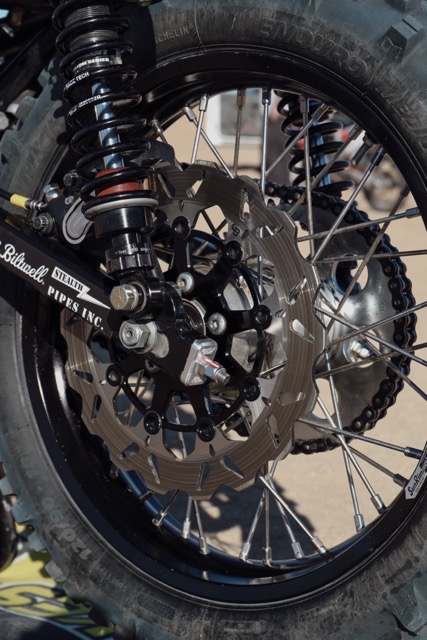
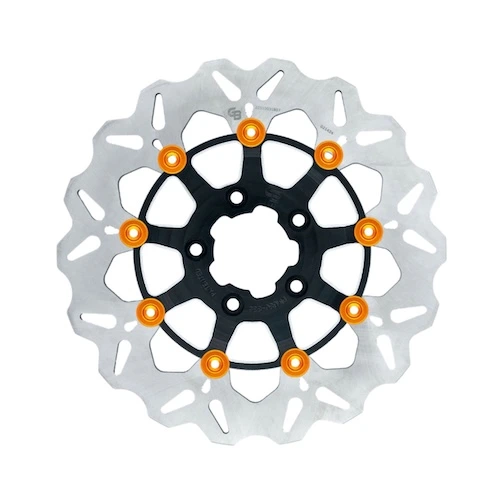
GBrakes® Dirt Bike Brake Rotors are cut from 420-grade stainless steel, heat-treated for strength, and CNC-ground flat for balance. Choose from round or wave profiles, floating or fixed setups, all built to resist heat warp, clear debris, and maintain bite through mud, shale, and desert runs. Built to survive off-road punishment while delivering precise, repeatable braking control. We’re proud to have them engineered in the USA and manufactured in Spain.
Choose the right dirt bike rotor for your ride.
Some terrain hits harder than your suspension. Rocks, roots, heat spikes, creek beds, and downhill hits load your brakes with more than just speed. If your rotors can’t hold the line under abuse, your lever fades fast, and your ride gets sketchy. This is where stock setups give up, and GBrakes® sport bike brake rotors start pulling weight. We build our dirt bike rotors to take hits, clear debris, and keep pad bite even when things get sloppy. Whether you’re charging through loam or hammering desert, our rotors are spec’d for real-world use. Oversized options improve leverage and slow down heavier dual-sport builds. Slotted patterns help keep mud and silt from glazing the pads.
Every face profile we carry, wave, round, floating, or fixed, is made to survive high temperatures and unpredictable terrain. These rotors are cut from 420-grade stainless steel, heat-treated to resist warping, and ground flat for balanced performance under load. We spec tight tolerances because inconsistency at the disc means inconsistency at the lever, and that’s not an option when your line drops into rubble at speed. GBrakes® dirt rotors aren’t just replacements. They’re the correction. Engineered for off-road braking, sized for control, and built to take a beating.
Most OEM rotors are made from budget steel, barely slotted, and heat-treated just enough to survive factory break-in. They’re fine, until you start pushing them. Add sintered pads, steep descents, high-load braking, and real trail heat? They warp, pulse, and fade fast.
Gbrakes dirt bike rotors are different. They’re cut from high-carbon stainless, CNC-machined for flatness, and slotted for real airflow, not just looks. Every rotor is engineered to stay true under repeated thermal load, aggressive lever use, and full suspension flex at speed.
Heat Warp
Thin, low-carbon steel can’t handle multiple hot stops. One long downhill and they ripple.
Pulse Under Load
Poor tolerance stacking = lateral runout = pad chatter and lever pulse.
Slotless Surface
No place for dust, water, or gas to escape. Pads glaze, feel goes vague, and braking power drops.
Edge Scoring
Budget rotors chip or score after hard terrain contact or embedded rocks in the pad.
What Gbrakes® Rotors Deliver
High-Carbon Stainless Construction
Resists heat deformation, lasts longer under pressure, and holds tolerance better, even after hundreds of trail hours.
Precision Slotting
Clears gas, mud, water, and pad debris with every rotation. No glazing. No fade. No brake dust buildup.
True-Cut Flatness
CNC-machined to resist warping over time, even under sintered pad abuse.
Trail-Ready Strength
Pad Compatibility
Tuned for aggressive compounds without chewing up bite edges or causing rotor lift.
Browse below for Dirt Bike Brake Rotors
We spec by use, weight, and real ride conditions, not catalog filler. Fixed, floating, oversized pick based on how you ride. We’ll make sure it stops.
Showing 13–24 of 172 results
-
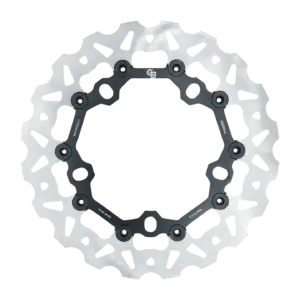
11.8″- 300mm Floating Mount Wave Rotor Front Harley Davidson – GBD9001X
$263.00 -
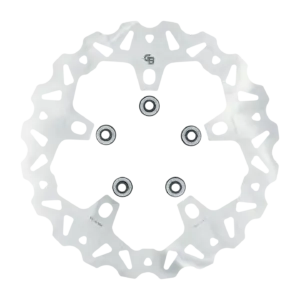
11.8″- 300mm Semi Floating Mount Wave Rotor Front Harley Davidson – GBD9002X
$190.00 -
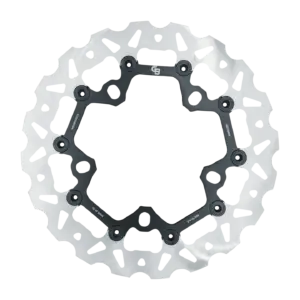
12.5″- 320mm Floating Mount Wave Rotor – Bracket Sold Seperately (Axial Brackets: SP063K and/or SP062K) – GBD9003X
$263.00 -
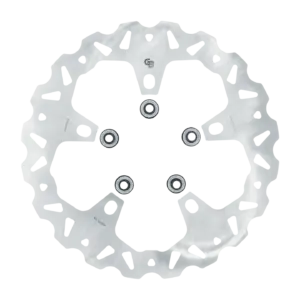
12.5″- 320mm Solid Mount Wave Rotor-Bracket Sold Seperately (Axial Brackets: SP063K and/or SP062K) – GBD9004X
$190.00 -
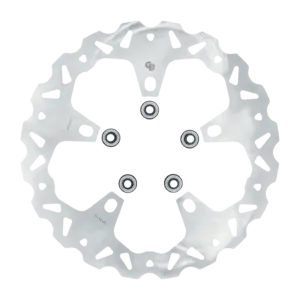
13″- 330mm Solid Mount Wave Rotor – GBD9005X
$202.00 -

11.8″- 300mm Solid Mount Wave Rotor – GBD9006X
$154.00 -
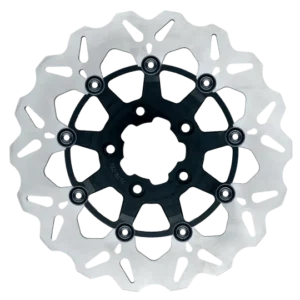
11.5″- 292mm Floating Wave® Rotor – GBDU002
$336.00 -
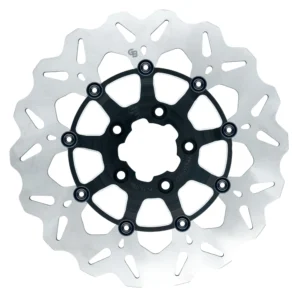
11.5″- 292mm Floating Wave – Black Carrier with Silver Contrast Cut – GBDU013
$336.00 -
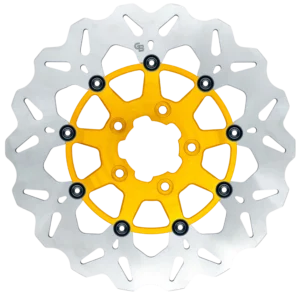
11.5″- 292mm Floating Wave – Gold Carrier – GBDU016
$336.00 -
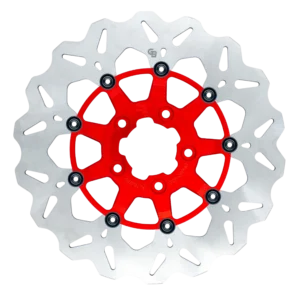
11.5″- 292mm Floating Wave – Red Carrier – GBDU021
$336.00 -
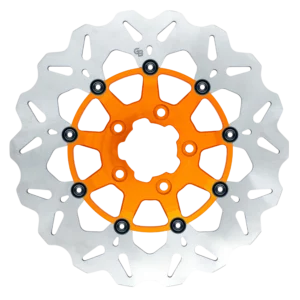
11.5″- 292mm Floating Wave – Orange Carrier – GBDU022
$336.00 -
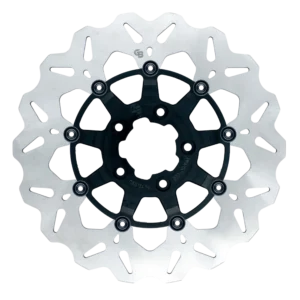
11.8″- 300mm Floating Wave Rotor – Black Carrier – GBDU003
$336.00
Rotor Types: Fixed vs. Floating, and Why It Matters
Fixed rotors are bolted directly to the hub, one piece, no flex. They’re simple, durable, and what most stock bikes run. But when you start heating things up—back-to-back descents, repeated braking, sintered pad compounds, that rigidity starts to show cracks.
Floating rotors use a two-piece system: a blade and a carrier, connected by float buttons that allow slight lateral movement. That movement helps the rotor stay aligned with the caliper under stress. You get better pad contact, more consistent feel, and reduced pulsing. Especially on long runs or when braking intensity spikes.
Not every dirt setup needs floating. But if you’ve upgraded power, added weight, or ride terrain that punishes brakes, don’t skip it.
Signs You’re Due for a Rotor Swap
You don’t need a cracked rotor to know it’s done. Watch for this:
- Grooves or ridges deep enough to catch a fingernail
- Warping, pulsing, or inconsistent lever feel
- Discoloration—blue or rainbow tint = cooked
- Visible cracking near slots or bolt holes
- Vibration or pad knockback under pressure
Why Stock Rotors Fade and Fail
OEM rotors are built for one thing: cost. They’re specced to meet minimum standards under moderate use. But moderate isn’t how most riders brake.
Stock rotors:
- Run thinner to save weight and money
- Lack ventilation or cleaning slots
- Aren’t designed for aggressive pad materials
- Can warp under repeated heat cycles
- Don’t account for terrain-specific forces
Choosing the Right Rotor, No Guessing
Ask yourself:
- What pads are you running? Sintered eats soft rotors. Organic needs flatness.
- What’s your terrain? Mud vs. hardpack vs. sand all behave different under braking.
- What’s your weight? Rider + gear + bags + fuel = rotor stress.
- What’s your pace? Trail pace isn’t MX sprint. Modulation beats raw bite.
We spec rotors that match. Every diameter, thickness, and bolt pattern is tested. You tell us how you ride, we’ll tell you what stops it.
Material Breakdown: What to Trust
Stainless Steel
- The workhorse of off-road. Corrosion-resistant, solid heat tolerance, handles abuse without drama. Works well with all major pad types—sintered, semi-metallic, ceramic.
Cast Iron
- Higher friction, better initial bite, but heavy and prone to rust. You’ll mostly see this in vintage builds or MX riders chasing max grip. Not ideal for multi-condition riding or wet weather.
Oversized Rotors
- More diameter = more leverage. That’s stronger braking without needing a stronger hand. If you’re hauling gear, riding steep, or need better modulation at slow speed, oversized rotors are the move.
Off-Road Rotor Features That Actually Matter
Here’s the stuff that makes a difference on real trails, not just spec sheets:
- Debris-Clearing: Cuts Slots and holes aren’t for show. They evacuate dirt, mud, and water that would otherwise glaze your pads.
- Precision Machining: Runout tolerance and thickness uniformity keep your braking predictable, not pulsy or vague.
- Edge Finish: Clean, beveled edges reduce pad chatter, keep noise low, and extend pad life.
- Mounting Fitment: Bolt pattern, offset, and outer diameter need to be dialed. Our rotors are platform-specific, no guessing, no “close enough.”
- Coating or Plating: Rust doesn’t help bite. Ours resist corrosion and hold up through hose-downs, creek crossings, and rainy miles.
Advanced Fitment Insights
Most riders look at rotors last. Don’t. It’s the most overlooked upgrade in a braking system, but arguably the most important after pads. Here’s what the experts know:
- Oversized rotors paired with steel braided lines and aggressive pads will change your braking confidence overnight.
- A good rotor can make average pads feel better. A bad rotor can make top-tier pads feel like trash.
- Rotor metallurgy affects heat soak, pad life, and lever feel. It’s not just about looks or size.
Slot direction, button float, and face machining all affect how your pads wear. Watch for tapered wear or uneven bite, it’s a sign your rotor isn’t doing its job.