
V-Twin Motorcycle Brake Pads
That Actually Stop the Weight
Built for the weight and torque of V-Twin motorcycles, GBrakes® pads use advanced bonding with NUCAP® NRS® technology to fuse friction material to the backing plate. Sintered and ceramic blends give predictable bite, fade resistance, and thermal stability for real canyon runs and cross-country miles. These pads are ISO-certified, race-validated, and trusted by riders who demand consistent stopping power under extreme stress. Browse here to choose the V-Twin pads that fit your bike.
If you’re riding a V-Twin and still trusting stock pads, you’re asking too much from too little. These bikes aren’t just heavy, they’re torque-rich, gear-loaded, and stop harder than most riders realize. That kind of braking stress can overwhelm a budget motorcycle brake pad fast, especially when you throw in downhill heat, passenger weight, or aggressive riding through real terrain. GBrakes®’ V-Twin motorcycle brake pads are engineered specifically for this kind of use. We build V-Twin motorcycle brake pads for real loads, real heat, and real riders who know what it feels like when a lever goes vague halfway into a canyon run. That’s why we offer them in sintered and ceramic blends, all matched to the needs of big bikes under big stress.
Everyone is backed by advanced bonding tech: NUCAP NRS™. This isn’t glue. It’s a patented hook matrix that mechanically fuses the friction material to the backing plate, forming one solid piece under pressure. That means no separation, no edge lifting, and no fade-inducing vibration, just consistent feel and confidence under your fingers. These are the same pads trusted by independent builders, cross-country tourers, and riders who log thousands of miles between Sturgis and Daytona. And they’re built in ISO-certified facilities that prioritize not just performance, but reliability, safety, and long-term wear.
Most factory pads glaze under stress. That’s fine if you’re crawling traffic. But one downhill run, a quick canyon exit, or a few stop-starts in heat, and you’re out of braking. You don’t ride light. Don’t stop weak. Sintered options provide the high bite and thermal resistance needed for touring, hauling, and aggressive descents. Ceramic blends deliver smoother braking and lower dust, better suited for daily traffic and moderate loads. Organic pads offer a softer bite with minimal rotor wear, ideal for older bikes or lighter-duty cruising. The goal is predictable bite, consistent feel, and the right thermal stability for your setup. These aren’t one-size-fits-all solutions. They’re built to align with how your V-Twin actually rides, brakes, and loads under stress.
Browse Below For V-Twin Brake Pads
Ceramic, sintered, or resin, we stock what stops your ride, not just what fills shelves. Choose based on how you ride. We’ll handle the fit. You handle the lever.
Showing 97–107 of 107 results
-
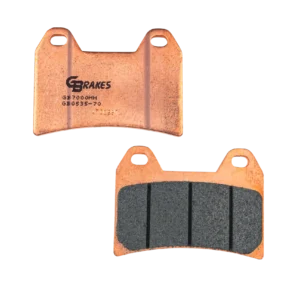
HH Sintered Compound – GB0535-70
$48.00 -

Carbon Race Compound
$116.00 -
Semi-Metallic Compound
$36.00 -
Carbon Race Compound
$116.00 -
Carbon Race Compound
$116.00 -
HH Sintered Compound
$38.00 -
Carbon Race Compound
$116.00 -
Carbon Race Compound
$144.00 -
HH Sintered Compound
$48.00 -
HH Sintered Compound
$38.00 -
Semi-Metallic Compound
$36.00
Why Stock V-Twin Pads Fade Too Fast
OEM brake pads are built to meet cost targets, not rider demands. If you’re riding loaded, long, or hard, you’ve probably already felt their limits. Here’s why they fall short:
- Lower temp thresholds - Factory pads can’t handle real heat. One downhill run or canyon ride, and they fade fast.
- Binder-heavy blends that glaze under heat - Cheaper options are packed with fillers that harden and glaze when cooked. That shiny layer cuts friction and kills brake feel, fast.
- Inconsistent friction response - One lever pull bites hard, the next goes soft.
- Quick wear when paired with upgraded rotors - Better rotors demand better pads. OEM compounds wear down fast when paired with higher-performance hardware, costing you stopping power and rotor life.
Ours are specced for the real-world heat, weight, and abuse V-Twins deliver. If your lever’s melting, your compound’s wrong.
When to Run Dual-Compound or Performance Pads
If you’re:
- Running two-up touring loads - More weight means more braking force. Dual-compound pads provide the bite and fade resistance to keep you in control with a passenger and gear onboard.
- Riding long-distance downhill grades - On long descents, heat builds fast. Performance pads maintain stopping power mile after mile, keeping your lever feel firm and your speed in check.
- Daily braking in hot traffic - Stop-and-go riding cooks your calipers. These compounds are built to stay responsive in heat-soaked conditions, avoiding the spongy fade of lower-grade options.
- Upgrading to floating or oversized rotors - Bigger rotors generate more heat and demand more bite. Our dual-compound and vented ceramic pads match the performance curve without sacrificing longevity or rotor life.
Dual-compound sintered options or vented ceramic blends give you edge performance, clean modulation, higher temps, longer life. We offer performance compounds that push past OEM limits while staying street legal and rotor-safe.
Rotor + Pad Matching, Don’t Mismatch Materials
Their behavior depends on what they’re gripping.
- Sintered pads + stainless rotors = High bite, high wear
- Ceramic pads + vented or wave rotors = Cleaner feel, stable heat performance
- Organic pads + thick cast rotors = Low-noise and mellow bite
Run sintered on soft rotors? Expect scoring. Run ceramic on high-carbon? You’ll overheat. We don’t guess. We match. Every Gbrakes® pad is recommended with a specific rotor setup to give you full system performance—not just friction.
This is what we recommend for:
Signs Your Pads Are Failing—Time to Upgrade
- Braking power falls off after repeated use - If your stops get longer the more you ride, your pads are heat-fading, losing bite when you need it most.
- Lever feel turns vague or spongy - A mushy lever often means your pads are overheating or glazing, interrupting the clean transfer of force from hand to rotor.
- You hear squeal or chatter at low speeds - Noisy brakes aren’t just annoying, they’re telling you the pad surface isn’t making proper contact anymore.
- Surface looks glazed, polished, or cracked - Visual signs like glassy shine or visible cracking mean the compound is cooked and no longer gripping effectively.
- Rotor face is unevenly colored or grooved - Blueing or scoring on your rotor face often points back to pad failure, it’s damage that builds up fast.
And if your bike just doesn’t stop the way it used to? That’s not “just age,” that’s brake fade.
Choosing the Right Brake Pad Compound for Your V-Twin
Here’s how the options stack:
Sintered Pads (Metallic-Based)
- Built from metallic particles fused under heat
- Highest bite and fade resistance
- Best for heavy cruisers, baggers, and canyon-pullers
- Can be loud and wear rotors faster
Ceramic Pads
- Made from ceramic fibers with non-ferrous fillers
- Low dust, quiet, and rotor-friendly
- Stable under moderate heat
- Great for daily riding and urban use
- Not ideal for aggressive or loaded braking
Organic Pads (Also called NAO)
- Resin-bound natural and synthetic fibers
- Quiet and gentle on rotors
- Wear faster, fade earlier
- Best for low-speed cruisers or lightweight V-Twins
Fitment That Stacks Up, Our Pad Shape Guarantee
Every V-Twin brake pad we sell is dialed in for real-world caliper fitment. That means:
- Backing plates cut to exact OE shape—no wobble, no edge contact
- Retention clips matched to factory spec—so nothing rattles loose on vibration
- Pad depth measured for piston travel—so you get full bite without overextension
- Chamfered pad edges—for clean engagement and reduced chatter under load
- Wear indicators where needed—because not every rider wants to eyeball wear tabs